English with Duda
  • Home
  • Download
  • Social
  • Features
    • Lifestyle
    • Sports Group
      • Category 1
      • Category 2
      • Category 3
      • Category 4
      • Category 5
    • Sub Menu 3
    • Sub Menu 4
  • Contact Us


Today I just have some thoughts I'd like to share with whomever is reading this. Maybe you're going through the same things, or maybe you haven't stopped to think about them yet.

Preparing online lessons still take longer than presencial ones, even though it's been over a year of teaching exclusively online.
Being a "Teaching Unplugged" enthusiast and having used many of the ideas in the book written by Thornbury and Meddings, I believe a good lesson shouldn't take long to prepare. Also, many of the ideas can be adapted to an online context (maybe I can write a full blog post about it soon). However, teaching young learners at a beginner level has become a challenge for me. Sometimes I think I have too many slides, but when I don't put the "book on the board", they don't understand what I'm saying. This is to say that I feel the need to have a well prepared google presentations slide with all the answers already circled and written, than to "underplan". And it is also important to balance the activities so that they can have things to do without looking at a presentation. Last week we did a miming game and it was a lot of fun.

I'm tired of seeing myself on the screen.
I know I can "turn off" my camera for myself on google meet. However, I like to see if I'm not making "a face", or if my gestures are appearing on the screen. The truth is, sometimes I think I look too tired, my hair is too long - haven't been to the hairdresser in over a year - and my posture is terrible. Last week, my lower back started telling me it needs a holiday. I don't blame it, since I tend to sit like a shrimp on a not so comfortable chair.


I miss the teacher's room.
Teaching online can be quite lonely. Although I have my coordinator and colleagues available at a WhatsApp group to share problems and ask questions, it's not the same as face-to-face interaction. When we are planning a lesson and get stuck, we can instantly ask someone for an idea, or when we are struggling with a misbehaved student and need tips on how to deal with this we can just ask for help. For instance, a few weeks ago I had to go to the school to sign some papers and had the chance to talk to my coordinator about an specific group that was weak and the material wasn't helping. She promptly sent a message to the director and arranged an online meeting with someone who could give us a workshop about how to adapt the course book we were using because apparently other teachers were having the same problem. And this was something I had been postponing to send her a message about it because I thought the issue was specifically with my group or my rapport with them.

I hope to be vaccinated soon
Here in Brazil the vaccination rate is slowly going up, we're at 10% of the population who have received both jabs. I should be vaccinated soon and I hope to be back to presencial teaching next semester. However, I believe I will give my availability to keep teaching online, as I think many students will still prefer to continue away from the classrooms. This is especially true for one-to-one learners, as the difference between the two modes is very little.

Anyway, I believe this was all I had to say today. See you next week!


* This was originally posted on my old blog on 3rd June 2017.

Dogme ELT is a teaching philosophy started by a group of teachers who considered that there seemed to be an over-reliance on materials in current language teaching (Thornbury, 2006, p. 72). This discussion started when Thornbury was inspired by the filmmaker Lars von Trier who proposed a cinema without the use of special effects and props (Dogme 95 movement). In his article, (Thornbury, 2000) he questions the quantity of coursebooks and resources and wonders if there is real communication and focus on 'the inner life of the student' in these materials. He also mentions that ELT has become grammar-obsessed, often forgetting about the real use of the language. Then, he outlines some principles for this new philosophy, which would be refined later on in his and Meddings' Teaching Unplugged book.

The three key principles for a Dogme (Meddings & Thornbury, 2009, p.8) lesson are:

  • It is conversation-driven;
  • It is materials-light;
  • It focuses on emergent language.

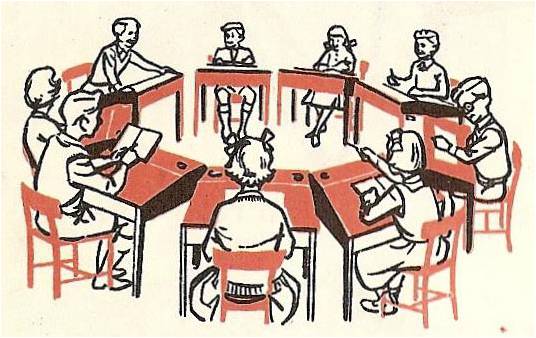
dogme_circle
Image via Thornbury's Blog

Conversation is a big part of Dogme ELT in the sense that ‘the direction of the lesson is determined by what emerges in conversation between the teacher and the learners’ (Wright, J. & Rebuffet-Broadus, 2013, p.117). Therefore, the teacher has the role of a facilitator, helping learners reformulate and express their ideas clearly and also as a language advisor, when he draws attention to relevant points of the language. This idea of fluency coming first comes from the Task-Based approach, which is something that perpetrates the beliefs of Dogme. It also draws on the idea of communication as the ‘exchange and negotiation of meaningful messages’ (Meddings & Thornbury, 2009, p.9) from the Communicative Approach. However, Dogme goes beyond that view as conversation should be about ‘the people in the room’ in order to be really meaningful for the learners.

According to Meddings and Thornbury (2001b), being materials-light does not necessarily mean that coursebooks would not be allowed in the classroom, but they should not dictate or distract from the main learning opportunities of the lesson. They believe that materials should encourage dialogic learning, which means that ‘both teachers and pupils make substantial and significant contributions and through which pupils’ thinking on a given idea or theme is helped to move forward’ (Mercer, 2003, p.76, as cited in Wright, J. & Rebuffet-Broadus, 2013, p.126). This means that materials should be locally generated and always be of interest to the learners, as this way it would make learning more likely to take place.

The last of the three key principles is the focus on emergent language, which has to do with dealing with the language that emerges in the conversation process. Dogme views the learners’ language as both process and product of instruction (Meddings, L. & Thornbury, S., 2001b, p.43). It draws on the Communicative Approach’s notion of a learner-centered curriculum where the focus was more on the process of communication than on the product (i.e. the knowledge of language). However, it adds on to it when it gets the learner’s grammar from the activities and turns it into the courses’ grammar itself. It has the learners as being agents in their own learning process, as they will determine their learning experience (Meddings & Thornbury, 2009, p.18).

The question that remains is ‘How do we make a lesson from the material we receive?’ (Meddings, L. & Thornbury, S., 2001b, p.41). Once the conversation has started and the language has emerged, the teacher is basically free to choose from the techniques available. For instance, he can choose to focus on form, by putting learners errors on the board and conducting a debate on why the errors were made and how to correct them. The teacher can also record parts of the conversation and conduct text reconstruction activities followed by role play of an improved version of the same dialogue. In short, the teacher has at his disposal the same techniques available from the traditional training courses. As the authors point out, the important thing is to capture text in any form and put it to work ‘by improving it, rehearsing it, performing it, re-formulating it in another mode or register’ (Ibid, p.43) and also focus on language, both the weaknesses and the strengths. In the end, there should be some kind of rounding-off activity, in order to reflect on what happened in the lesson and discuss the possibilities for the future.

Thornbury actually confesses that ‘there is nothing very original in Dogme’ (Thornbury, 2005, p.3 as cited in Wright, J. & Rebuffet-Broadus, 2013, p.71). It brings ideas from the communicative approach, humanistic education, critical pedagogy and other materials-light approaches, which mean that many teachers who follow the Dogme principles, actually only incorporate some of these aspects to their teaching.

______________

References

Books

Freire, P. 1968 Pedagogy of the Oppressed Penguin

Meddings, L. & Thornbury, S. 2009 Teaching Unplugged: Dogme in English Language Teaching Delta Publishing

Thornbury, S 2006 An A-Z of ELT Macmillan

Wright, J. & Rebuffet-Broadus, C. 2013 Experimental Practice in ELT: Walk on the Wild Side The Round Publications

Articles

Meddings, L. & Thornbury, S. 2001 'Dogme and the coursebook'
http://thornburyscott.com/tu/MET3coursebook.htm (12.11.13)

Meddings, L. & Thornbury, S. 2001 'Using the raw materials: A Dogme approach to teaching language' MET vol 10, no 4, 2001

Meddings, L. & Thornbury, S. 2002 'Using a coursebook the Dogme way: Making sure it's the dog that wags the tail' MET vol 11, no 1, 2002

Meddings, L. & Thornbury, S. 2003 'Dogme still able to divide ELT'
http://www.theguardian.com/education/2003/apr/17/tefl.lukemeddings (11.11.13)

Nield, D. 2005 'Spirit of Dogme' English Teaching Professional, Issue 41, Nov 2005

Thornbury, S. 2000 'A Dogma for EFL' IATEFL Issues, 153, 2.


What is Baamboozle?

It's a website where teachers can create their own educational games or use one of the countless already made by other teachers. My students from all ages and levels love it because there are bonuses, extra points, swapping points, "bombs", and the possibility of playing in groups or individually.


How does it work?

It's basically a hidden cards game, where students should choose a number and do what is asked in the card. Students do not operate it, it is the teacher who projects the game on the screen and opens the card the teams choose. However, if you use breakout rooms, students may operate the game, too.

Bamboozle


Is it free?

Yes, but there is a paid option where you have more space for uploading images, you can create a copy and edit other teacher's games. Personally, I can make do with the free version because there are already thousands of games available. But I wouldn't oppose if my school would be willing to pay for a yearly subscription for the teachers to use the same account and have more options to create games.

Screenshot from the Bamboozle website - An example of how students see the game

Suggestions on how to use Baamboozle in your online class

Group games - That's how I usually play it. I divide my students into groups and they can help each other complete the tasks in the cards. Even though it's one group at a time, the others are really interested in what the other group answers because it's after all a competition. They can choose their group's name and it's a lot of fun. They also enjoy the "win 50 points" and "swap points" kind of power ups - although it seems unfair, they don't mind.

Treasure hunt for young learners - There are many pre-made games of treasure hunt for the online classes. My young learners love it. There are also many movement games where students have to do the action shown in the card (which can be a fun gif). It's nice to have some games saved in case you have 5 to 10 minutes to spare at the end of your lesson.

Speaking practice - With my one-to-one students and older learners, I also use Bamboozle for speaking practice. There are IELTS questions, FCE questions, and you can set a timer for each student to speak about the theme that's in the card.

Vocabulary fun games - With teens and lower level groups, I always like to have saved some options for when we have extra time. For example, "name 5", "think of something", or alphabet games.

__________

Have you ever used Baamboozle? How do you use it? What have you fund most useful from this website? Share in the comments! :)


* This was originally posted in my former blog - Today, my students - on 30th May 2017.

I became interested in Dogme after attending a three-day course with Luke Meddings in Brazil in 2012. I like to say that, since then, I have found a teaching philosophy that I truly believe in. After the course, I bought the Teaching Unplugged book and began including many of the activities into my lessons. Also, I wanted to see if a Dogme approach would work with young learners, so I began creating my own activities, too.

I was finally able to share the results of my experience applying Dogme inspired activities in my lessons - it wasn't possible to teach a whole course based on the approach because the school did not offer that much teaching flexibility - at a teaching conference in Brazil in 2013. To my surprise, Luke Meddings himself attended our talk and gave us some really nice feedback. He also gave the plenary talk closing the conference.

There, he talked about taking steps towards a more humanistic approach to teaching, preached by the Brazilian educator Paulo Freire (1968), who proposes a new relationship between teachers, students and the society, meaning that the class is a place to seek knowledge instead of transmitting it. This is reflected in the view that Dogme has of 'language learning in a profoundly human way' (Meddings & Thornbury, 2003).

This humanistic approach reminded me of my own experience as a language learner, where lessons and language items would be more memorable when the teacher personalised the activities, asking about our interests, and really showing that they mattered. That was not the rule, though, as most lessons were very book-centered and only a few teachers were truly interested in what a bunch of children/teenagers had to say.

Dogme also has a strong view on the importance of dealing with emerging language. According to Meddings and Thornbury (2009, p. 8), 'rather than being acquired, language (including grammar) emerges' as an organic process and given the right conditions. And, from what I have learned by experimenting with Dogme, it is the most challenging part, especially for teachers who are non-native speakers. However, the confidence to deal with emerging language comes with time, and it is extremely important to take notes of what students are saying during the activities.

Finally, as I have been saying in many of my posts here, I believe coursebooks are a useful tool for teachers, but it concerns me when we become over-dependent on them and leave aside our learners' needs. The materials-light aspect of Dogme may seem impossible in contexts where teachers must follow a course book, but there are ways of incorporating activities in the lessons. It is a very good way of adding variety to the lessons and to have the students' needs in mind at the same time.

_________

References:

Freire, P. 1968 Pedagogy of the Oppressed Penguin

Meddings, L. & Thornbury, S. 2009 Teaching Unplugged: Dogme in English Language Teaching Delta Publishing

Thornbury, S 2006 An A-Z of ELT Macmillan


This is the first post of a series I will begin taking about some online teaching tools that are certainly very useful for English teachers.
Wordwall website

What is Wordwall?
The first tool I will present is Wordwall, which is a website for creating online teaching resources. There is an amazing variety of templates available, so the possibilities are endless. Due to its design, the activities seem like games, so my younger students are big fans. There, you can create matching activities, quizzes, crosswords, memory games, maze chase, word search, gap filling, group sorting, true or false, wheel games, just to mention a few!

How does it work?
The idea is simple, you choose your template, enter your content, you can include pictures from your computer or use their library and then share the link with your students. There is also the possibility of printing the activities as worksheets. Here is the explanation taken from their website:


Personally, I rarely create my own content because there are already many resources made by other teachers and they are really good. You just need to click on "community" and search for the topic you are teaching.

In class, you just copy and paste the link for the game in the chat and students click and play the game individually. You can also present your screen and play it together with the whole group, or in small groups in breakout rooms.

Is it free?
Yes, but there are some price plans available with more templates and an increased limit of resources you can create per month. With the free subscription, you can only create 5 resources per month, but by selecting a plan you can create unlimited resources. Also, you are only allowed to create printable resources if you choose a plan. Personally, I use the free version, but maybe for teachers who are in the "hybrid teaching" mode, maybe it can be worth paying.

Suggestions on how to use Wordwall in your online class

Repetition - Wordwall is really nice for repetition of activities. Students won't mind playing the same game twice or three times and we know how repeating an activity can be useful for learning purposes. My students often ask if they can play the game again and I always let them. I ask them to see if they can break their record, do the activity in less time, or if they can get all correct the second time they play.

Breakout rooms - There are many speaking activities about an infinity of topics. What I like to do is divide my learners in breakout rooms where one student will be responsible for presenting the game on their screen. Then, they play the speaking game (wheel, cards, or quizzes are nice ones) and I just monitor by going in each room.

Homework - Sometimes I play a wordwall game with my students and they like it so much that I assign it for homework. I always post the link for the games we have played in class in their classroom, so that they can play it after class.

Practice - Wordwall works great for vocabulary, grammar and speaking practice. I wish there could be a way to include listenings, too. Just be careful with the time allocated for this practice. It can be really fast, so students usually take 2 or 3 minutes to finish playing, but if they get too excited, a game can last much longer.

Have you ever used Wordwall? What do you think of it? Do you know any different ways to use it? Please, comment below. :)

Coming from an ELT general English teaching context, I could find some similarities and differences between both fields. Some people would say that EAP (English for Academic Purposes) is a "more specialized" sector within ELT and this may be true, as the first came after the latter. In addition, there are other influences on EAP apart from ELT, for instance, register analysis, study skills, genre analysis, academic literacies, among others. Anyway, what is important here, is that knowing these differences will help teachers cater to the needs of EAP learners and, at the same time, use techniques that are familiar to them from an ELT background.

Time - In EAP, time is often limited, as students may already be taking the course or need to take a proficiency exam in order to be accepted in a course. Whereas in ELT, there are longer time scales.

Proficiency - Proficiency targets in EAP are frequently very ambitious, as students are coming into the field at even lower levels nowadays. In ELT, the goal is to achieve general English proficiency and this may mean different things for different students.

Focus - EAP students have an academic focus and these are defined by their specific needs. ELT students have a broader focus, which is defined by general language proficiency.

Motivation - EAP students are more often self-motivated, which is a little different from general ELT students, who often need teacher-led motivation in order to keep them coming to class.

Goals - EAP students have a clearly defined goal they are working towards, which is reaching academic independence and autonomy. For ELT students, there are students with different goals in the same class.

Material - EAP students may bring material to contribute to the lessons, as there are different fields and this helps the teacher prepare the lessons. However, there are EAP course books available in the market, which cater to general EAP skills and critical thinking following the CEFR levels. In ELT, the materials is presented by the teacher, who often chooses a course book for the level, or follows the school's programme.

Students - The most important difference between EAP students is disciplinary, which means, what subject they are planning to study. Whereas for ELT learners, the key differences can be based around culture and language.

Some similarities between both fields can be found in methods, approaches and practices. They both share: the communicative approach; task-based learning; collaborative learning; and learner-centered approach.

There are also similarities in some key skills that both EAP and ELT teachers should have. They are: planning and organization; creative skills and techniques; language analysis; communication and presentation; understanding of student behaviour, motivation and psychology; and classroom management skills. Related to those skills, Chazal (2014) points out that "EAP teachers must be able to understand and respond to their students' needs, difficulties, and learning styles".

_______________

REFERENCES

1997. R. R. Jordan. English for Academic Purposes: A Guide and Resource Book for Teachers. Cambridge University Press.

2014. Edward de Chazal. English for Academic Purposes. Oxford University Press.


Today, I'm going to tell you how I got into EAP and some basic concepts around this field that I am beginning to study for my current teaching practice.

I have never been a one-to-one teaching enthusiast. Since when I started teaching, people would ask me if I taught private lessons and I would always say 'no' for many reasons. The first one being that I am shy, thus, I was scared that I wouldn't be able to maintain a conversation with only one person. In addition, people always came to me with very specific needs, such as 'conversation lessons', 'English for traveling' or 'business English' (too busy to answer my messages, though) and I was in the beginning of my career, still doing the CELTA, etc. Finally, I just thought teaching kids and groups was more fun. So, it was easier for me to refuse them.

However, when the pandemic hit, and we had to shift to online lessons, I could learn how to use online teaching platforms, took a few courses and now I really enjoy teaching English online. So, in February this year, I decided to put up a flyer and share on social networks for one-to-one lessons. Naturally, people came to me asking for private lessons online and I accepted them. And that's basically how I got to teaching English for Academic Purposes, which is a field I was not familiar with until this year. I now have two students with very specific needs and both of them are academics.

In order to be better informed on teaching EAP students, I did some research online and found books and materials that suited our needs. Now I am learning as I go since time is of the essence for my students.

Some basics of EAP

From what I have read so far and my teaching context, the most important aspect of EAP is that it is needs driven. In other words, students learn English with a particular purpose in mind. For instance, they may want to enter a university abroad, they may be professors in a another language wanting to teach in English, or they may even already be Master's or Doctorate students who need to improve their English skills to do presentations and write essays. Thus, their goal is identifiable and describable, and should inform the EAP programme the teacher will create for them.

Similarly to ELT, EAP involves the development of the four skills in an integrated way. However, the teaching and learning of English in EAP happens so that students can operate effectively in the disciplines.  Also, there are many skills and competences in EAP, to mention a few:

  • critical thinking
  • study skills (e.g. citation, referencing)
  • getting familiarized with the target academic culture
  • development of student autonomy and independence

It is important to mention that EAP is not concerned with subject content. Rather, its goal involves developing key academic skills, language and competences. The field concerned with teaching content through language is CLIL (Content Language Integrated Learning). For example, EAP will refer to general academic vocabulary, such as 'analyze', 'evaluation', 'conclusion', 'focus on', etc.

An increasing trend in EAP is for students to begin learning at lower levels, such as A2 and lower B1. This is my teaching context. I have one A2 student working towards becoming a B1 by the end of May - we started in March - and one B1 student trying to improve her presentation skills to be able to teach in English my the end of May. This way you can see that I am also working with ambitious goals.

Generally, EAP students are highly motivated, as they have an specific goal in mind. EAP teachers should aim to keep this motivation high and learning relevant and engaging.

I believe this is the basics of EAP, just to give a general idea. Since I come from an ELT teaching context, I will try to focus on the main differences between these fields in my next post.

_______________

REFERENCES

1997. R. R. Jordan. English for Academic Purposes: A Guide and Resource Book for Teachers. Cambridge University Press.

2014. Edward de Chazal. English for Academic Purposes. Oxford University Press.

Newer Posts Older Posts Home

About Me


I'm Duda Costa, an English teacher from Recife, Brazil. I have started teaching in 2009. I am graduated in Letras and I hold a Master's degree in Linguistics focusing on Language Acquisition. I hold a CELTA and DELTA Module 1. I like teaching children, teens and adults of all levels. In this blog, I will share experiences, things I like to study, and mostly some random thoughts about education and teaching English in the 21st century. I hope you enjoy and leave a comment! :)

Pages

  • Home
  • About me

Categories

  • 2021
  • Dogme
  • EAP
  • ELT
  • Online Teaching Tools
  • Random thoughts
  • Teaching Online
  • Teaching Unplugged

Blog Archive

  • ▼  2021 (10)
    • ▼  November (1)
      • A day in the life of a tired teacher
    • ►  May (4)
    • ►  April (5)
Powered by Blogger.

Search This Blog

Popular Posts

  • Teaching Online: Baamboozle
  • Dogme Series: Introducing Dogme
  • English for Academic Purposes (EAP)

A day in the life of a tired teacher

  Today, my students managed to drain all my energy. I thought the day would go smoothly because we had just come back from a four day holid...

Designed By OddThemes | Distributed By Blogger Templates